Showing posts with label international relations. Show all posts
Showing posts with label international relations. Show all posts
September 28, 2009


September 25, 2009
Goodbye Nuclear Weapons, See You in Iran!
 Yesterday, the United Nations Security Council, with President Obama as its chairman, voted to strengthen the restrictions on nuclear technology, making it more difficult to convert peaceful applications into weapons programs. This, however, is still a matter of enforcement which has been a persistent problem for the United Nations in the past; its coffee and doughnut budget has been exceeded for every year of its existence. Iran is at the heart of this matter, even though President Obama was very general in his comments during the meeting, but glared at Mahmoud Ahmadinejad because "he knows what he did."
 June 8, 2009
U.S. Mulls Intercepting N. Korea Shipping; Seeks More Kimchi

This effort would likely be highly confrontational to North Korea which has already threatened retaliation if such actions are taken. (N. Korea takes its "kimchi" seriously.) Currently, its Taepodong-2 missile can potentially threaten South Korea and Japan and North Korea has one of the largest militaries in the world. These threats underline how seriously North Korea wishes to become a nuclear power.

Stopping the arms trade, which is one of the most profitable enterprises in North Korea, would cripple its already ailing economy. (The dark area on the map is North Korea. The lone light is from Kim Jong-Il's night light. No word on his blankie.) Analysts suspect that North Korea pumps up to 40% of its GDP into military efforts, leaving its population in abject poverty.
May 29, 2009
Rice and Ray-Bans: North Korea Redux
On May 25th, North Korea tested a nuclear bomb which was estimated to be the same destructive force as the bomb dropped on Hiroshima in World War II. In addition to the nuclear test, North Korea tested short range missiles which can potentially be used to deliver a nuclear attack on South Korea or Japan and involve the U.S. in the battle. The world must react with speed and solidarity in order to keep North Korea from embroiling the region, and even world, in conflict.
According to a report in The Economist, this nuclear test may be the result of internal changes in the influence of hardliners from the armed forces. One of these hardliners, Kim Yong-chol, is advocating the end of cooperation and contact with South Korea and further isolating the North. This increase of hardliner influence is coming with the blessing of Kim Jong-Il who may have suffered a stroke last year. Due to the extreme difficulty in determining the internal politics of North Korea, much is speculation.
While on an international level, North Korea’s actions appear to be irrational, on a state or domestic level, this saber rattling has a very rational goal. These tests are an attempt to increase the internal control of the communist regime in North Korea. According to Wendy R. Sherman, who coordinated North Korea policy during the Clinton administration, “they care about external matters only insofar as it helps ensure the survival of the regime.” These tests are likely designed to appeal to the nationalist sentiment of the North Korean people and the media there is heaping of praise on the tests and the government. Maintaining their power is a huge motivator for the ruling class in North Korea. They are keeping their country in effectively the 17th century while living a life of luxury.
Their struggle to maintain power causes actions that baffle the rest of the world community. It provokes responses from the outside world that damage the economy and well being of the country as a whole. In the game of international relations, it can be counted on to make the play that will ensure the survival of the regime, not what is best for the country as a whole. Its population is living in abject poverty and incentives do not appear to have had any affect on how North Korea conducts its international business.
Since maintaining power is the motivator for North Korea, taking actions that will prolong, or threaten, the regime may be the only way to get compliance from North Korea. According to a New York Times article, “North Korea is not likely to be receptive to incentives. And it may have concluded that having nuclear weapons is a necessity for its own preservation.” Possessing nuclear weapons is the regime’s trump card in fending off potential threats to the regime. Further economic sanctions may be the only peaceful step toward getting North Korea to comply and give up its weapons. However, because of the importance they have placed on weapons, it is highly unlikely that they will give these up without a fight. Yet, that does not mean that war cannot be avoided.
The key in the world response may lie in China. Of the limited international trade with North Korea, much of it is with China or flows through China. China is the closest thing to an ally that North Korea has. The U.S. can use its relationship with China to garner support in these sanctions. In the past, North Korea has ignored U.N. resolutions and the sanctions have not been strictly enforced, but with China’s cooperation, these can be effective. Creating internal pressure via sanctions is the most effective, and safest, route to get the North Koreans to change.
Creating an economic situation where maintaining the regime in its current form is untenable is the only hope for North Korea to have a permanent change – similar to the situation in the Soviet Union. By quickly implementing strong and solid sanctions and preventing the North Korean regime from acquiring more nuclear weapons material, North Korea could step down its threatening actions. Eventually, with a build up in internal pressures, the North Korean regime can begin to change and open the society in a process that will take many years.
According to a report in The Economist, this nuclear test may be the result of internal changes in the influence of hardliners from the armed forces. One of these hardliners, Kim Yong-chol, is advocating the end of cooperation and contact with South Korea and further isolating the North. This increase of hardliner influence is coming with the blessing of Kim Jong-Il who may have suffered a stroke last year. Due to the extreme difficulty in determining the internal politics of North Korea, much is speculation.
While on an international level, North Korea’s actions appear to be irrational, on a state or domestic level, this saber rattling has a very rational goal. These tests are an attempt to increase the internal control of the communist regime in North Korea. According to Wendy R. Sherman, who coordinated North Korea policy during the Clinton administration, “they care about external matters only insofar as it helps ensure the survival of the regime.” These tests are likely designed to appeal to the nationalist sentiment of the North Korean people and the media there is heaping of praise on the tests and the government. Maintaining their power is a huge motivator for the ruling class in North Korea. They are keeping their country in effectively the 17th century while living a life of luxury.
Their struggle to maintain power causes actions that baffle the rest of the world community. It provokes responses from the outside world that damage the economy and well being of the country as a whole. In the game of international relations, it can be counted on to make the play that will ensure the survival of the regime, not what is best for the country as a whole. Its population is living in abject poverty and incentives do not appear to have had any affect on how North Korea conducts its international business.
Since maintaining power is the motivator for North Korea, taking actions that will prolong, or threaten, the regime may be the only way to get compliance from North Korea. According to a New York Times article, “North Korea is not likely to be receptive to incentives. And it may have concluded that having nuclear weapons is a necessity for its own preservation.” Possessing nuclear weapons is the regime’s trump card in fending off potential threats to the regime. Further economic sanctions may be the only peaceful step toward getting North Korea to comply and give up its weapons. However, because of the importance they have placed on weapons, it is highly unlikely that they will give these up without a fight. Yet, that does not mean that war cannot be avoided.
The key in the world response may lie in China. Of the limited international trade with North Korea, much of it is with China or flows through China. China is the closest thing to an ally that North Korea has. The U.S. can use its relationship with China to garner support in these sanctions. In the past, North Korea has ignored U.N. resolutions and the sanctions have not been strictly enforced, but with China’s cooperation, these can be effective. Creating internal pressure via sanctions is the most effective, and safest, route to get the North Koreans to change.
Creating an economic situation where maintaining the regime in its current form is untenable is the only hope for North Korea to have a permanent change – similar to the situation in the Soviet Union. By quickly implementing strong and solid sanctions and preventing the North Korean regime from acquiring more nuclear weapons material, North Korea could step down its threatening actions. Eventually, with a build up in internal pressures, the North Korean regime can begin to change and open the society in a process that will take many years.
May 22, 2009
The Reign in Spain to Stay Mainly in Spain?

This law, however, is giving the Spanish government headaches though. It is causing them to worry about relations with the U.S. as it is trying to forge a relationship with the Obama administration. While this can cause tensions with the U.S., especially with issues of state sovereignty, ultimately the overall relationship with the U.S. is unlikely to change. The U.S. (read Bush administration) might get a black eye, but any punishment will be avoided (as long as anyone convicted never goes to Spain).
Yet, Spain should not change this law. Real outcomes happen when they begin investigations. In the Pinchet case, Spain's actions caused Pinochet to be under house arrest in Britain and it also pushed Chile to start its own investigation. Spain's moral position is influencing other nations to examine human rights abuses and while this may rub some states the wrong way, it does put Spain in a moral high ground. Overall, these investigations and prosecutions benefit not only Spain, but also the rest of the world.
May 11, 2009
Al Qaeda: Tenacious Bastards Aren't They?
In a report from the New York Times, the strife in Pakistan is helping Al Qaeda in its recruitment. The conflict in Pakistan has raised the hopes that there will be a "jihadist takeover of the region," which attracts more recruits. This recruitment effort is replacing the numbers lost due to the airstrikes in the area which so far this year number 16 in comparison to 36 total in 2008.
While U.S. intelligence sources suggest that a Taliban takeover of Pakistan is unlikely due to the strength of the Pakistani army, Al Qaeda is smelling blood in the water. Al Qaeda has changed its tactics to a more localized focus. They are being run by small, well-organized groups which are working to destabilize Pakistan and create a feeling of insecurity. The fighting is in the Buner and Swat regions of Pakistan, which are close to the capitol of Islamabad.
The destabilizing effect of open conflict in the region is still a serious concern. An unstable Pakistan is a scary thought. They have a large army and nuclear weapons. Their borders are porous and a haven for Al Qaeda and the Taliban. Pakistan must be a top priority. Pakistan is already bordering on being a failed state and a prolonged conflict near the capitol would push it over the edge.
While U.S. intelligence sources suggest that a Taliban takeover of Pakistan is unlikely due to the strength of the Pakistani army, Al Qaeda is smelling blood in the water. Al Qaeda has changed its tactics to a more localized focus. They are being run by small, well-organized groups which are working to destabilize Pakistan and create a feeling of insecurity. The fighting is in the Buner and Swat regions of Pakistan, which are close to the capitol of Islamabad.
The destabilizing effect of open conflict in the region is still a serious concern. An unstable Pakistan is a scary thought. They have a large army and nuclear weapons. Their borders are porous and a haven for Al Qaeda and the Taliban. Pakistan must be a top priority. Pakistan is already bordering on being a failed state and a prolonged conflict near the capitol would push it over the edge.
May 1, 2009
Thoughts on Iran and Falafel
Recently, we here at Puggling were wondering: just what all is involved with an improved relationship with Iran? First, our thoughts went to better falafel in the U.S. But other than that, what is to be gained? Well, Iran is smack dab in the middle of both Iraq and Afghanistan. Perfectly situated to help the stability of both countries.
View Larger Map
For Iraq, the militias which have been causing trouble are funded and supplied by Iran. According to The Economist, after the Iraqi army with help from British forces "many of the militia leaders fled to Iran, which had been supplying them with weapons, especially Katyusha rockets." Iran and Iraq do not like each other. Period. They fought a nasty war in the 80's and they differ religiously as well. Iran is not necessarily helping the militias to thwart U.S. interests, but that is a nice bonus. If Iran withdraws its support of these militias, stability after the U.S. leaves is a greater probability. In Basra alone:
With respect to Afghanistan, Iran can help provide access to the regions where there are limited roads. It is an issue when aid and supplies cannot get to their destinations. Also, Iran undoubtably has some experience in dealing with the Taliban and the tribal regions which border it. The fractured and tribal nature of Afghanistan hinders development and the creation of a national government. Our hopes though remain on falafel...

View Larger Map
For Iraq, the militias which have been causing trouble are funded and supplied by Iran. According to The Economist, after the Iraqi army with help from British forces "many of the militia leaders fled to Iran, which had been supplying them with weapons, especially Katyusha rockets." Iran and Iraq do not like each other. Period. They fought a nasty war in the 80's and they differ religiously as well. Iran is not necessarily helping the militias to thwart U.S. interests, but that is a nice bonus. If Iran withdraws its support of these militias, stability after the U.S. leaves is a greater probability. In Basra alone:
According to a Western police adviser, some 900 of the murders that took place in 2006, in a city of 1.7m people, remain unsolved to this day. The murder rate that year was some 40 times higher than Britain’s. In 2007 the figure was probably worse. Some say half of Basra’s 20,000-strong police force had been infiltrated by the militias. Many kidnappings and murders were committed by people in police uniforms. A sheikh of the al-Abadi tribe says the militias killed about 10,000 Basrawis during their two years’ reign. (The Economist)These militias are big perpetrators of the crimes that are causing instability and Iran can sweep their legs out from under them.
With respect to Afghanistan, Iran can help provide access to the regions where there are limited roads. It is an issue when aid and supplies cannot get to their destinations. Also, Iran undoubtably has some experience in dealing with the Taliban and the tribal regions which border it. The fractured and tribal nature of Afghanistan hinders development and the creation of a national government. Our hopes though remain on falafel...
April 28, 2009
Cuba: Where GM Automobiles are Still the Only Game in Town
While many things are going on in the world today, from Pakistan circling the drain to Swine Flu, the Obama administration is preparing for informal talks with the Cuban government according to an article in the New York Times. While Cuba has a history of stopping the conversation before substantive talks, preparations for talks is a sensible thing to do. Both of the Castro brothers are getting elderly and they will not be around forever. A thaw in the relations between the countries would be beneficial to all. A new market would be available for American goods and for Cuba, a new promise of economic prosperity.
While many Cuban Americans oppose improved relations with the two countries, the trade embargo, in place for 47 years, has not worked. Castro & Co. are still in business and until they die, show no signs of letting go. As with the Soviet Union, if there is an easing in economic restrictions & social freedoms (See: Perestroika & Glasnost) there will be severe issues with maintaining control over the population. Which is probably why Castro (Raul and Fidel) have resisted change.
This is an application of what has been dubbed the Obama Doctrine which invovles listening and opening dialogs with other nations in an effort to use "smart power" which is both diplomatic efforts combined with military pressure. In other words - speak primarily, but remember you still have a stick.
While many Cuban Americans oppose improved relations with the two countries, the trade embargo, in place for 47 years, has not worked. Castro & Co. are still in business and until they die, show no signs of letting go. As with the Soviet Union, if there is an easing in economic restrictions & social freedoms (See: Perestroika & Glasnost) there will be severe issues with maintaining control over the population. Which is probably why Castro (Raul and Fidel) have resisted change.
This is an application of what has been dubbed the Obama Doctrine which invovles listening and opening dialogs with other nations in an effort to use "smart power" which is both diplomatic efforts combined with military pressure. In other words - speak primarily, but remember you still have a stick.
April 24, 2009
A Taliban in Pakistan (well, more than one really...)
So, the Taliban is back in vogue in the 'Stan region of the world. Recently, Pakistan has slowly been succumbing to the Taliban. They have set up Islamic law in the Swat region of Pakistan and taken over an area only 60 miles from the capitol, Islamabad. There is a real chance that Pakistan will become a failed state (and some could make the argument that it already is). In a recent New York Times article, General David Petraeus states that these extremists who have set camp in the border region between Afghanistan and Pakistan are threatening "Pakistan's very existence."
 As the Taliban is slowly moving over the country, it is taking advantage of anti-American sentiment and, like it did in Afghanistan, is promising justice and order in the country. If the Taliban does take control of Pakistan, this will be a very serious issue. Quite simply, Pakistan has nukes. Not a lot, but one is enough. If an extreme group such as the Taliban has control over these weapons, all hell could break loose. Shipping a nuke overseas and striking another country would cause great destruction and fear and probably start a nuclear war. The potential targets are many, but the top three, in my best estimation, would be: 1. The United States, since it was the main aggressor in Afghanistan, forcing them out. 2. The United Kingdom, a major ally of the U.S. during the Afghanistan war. 3. India, Kashmir has been a source of tension ever since Great Britain split the countries up in the 40s.
While a nuclear attack on all three countries is devastating, the nuclear fallout will affect not only the human population of the affected region, but food production would be affected in India and maybe even China. A food shortage in the world's two most populous countries (both of which are nuclear capable and emerging economic giants) will cause chaos which could pull the entire world into conflict. The bottom line is, Pakistan cannot fail. The ramifications are too dire.
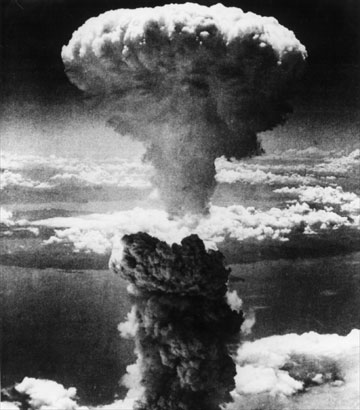 As the Taliban is slowly moving over the country, it is taking advantage of anti-American sentiment and, like it did in Afghanistan, is promising justice and order in the country. If the Taliban does take control of Pakistan, this will be a very serious issue. Quite simply, Pakistan has nukes. Not a lot, but one is enough. If an extreme group such as the Taliban has control over these weapons, all hell could break loose. Shipping a nuke overseas and striking another country would cause great destruction and fear and probably start a nuclear war. The potential targets are many, but the top three, in my best estimation, would be: 1. The United States, since it was the main aggressor in Afghanistan, forcing them out. 2. The United Kingdom, a major ally of the U.S. during the Afghanistan war. 3. India, Kashmir has been a source of tension ever since Great Britain split the countries up in the 40s.
While a nuclear attack on all three countries is devastating, the nuclear fallout will affect not only the human population of the affected region, but food production would be affected in India and maybe even China. A food shortage in the world's two most populous countries (both of which are nuclear capable and emerging economic giants) will cause chaos which could pull the entire world into conflict. The bottom line is, Pakistan cannot fail. The ramifications are too dire.
April 22, 2009
And Iran, Iran so far away.... (it's been done before, so sue me)
Iran has announced that it officially is welcoming talks over its nuclear program. Likely, Iran is looking for gains in exchange for changes in - or even outright abandonment of - their nuclear program. While complete abandonment of their nuclear program is highly unlikely, suspension of the program, perhaps for increased trade, or maybe normalized relations with the U.S., is probably the goal of U.S. diplomats. The talks will be among the five United Nations Security Council members, Germany and Iran.
Suspension of the program will face much opposition from both internal and external factors. Inside Iran, the hardliners would still push for continuation of the program for both the energy and potential weapons gains. Outside of Iran, Russia has been supplying them with the nuclear material which they are attempting to enrich. This is a nice revenue source for Russia and Russia is a valuable trading partner with Iran so they do not wish to stop a profitable relationship.
If the main issue that the U.S. has is the enriching of uranium, then there is a practical solution. There are heavy water nuclear reactors which do not require enriched uranium as a fuel. These reactors do not produce as much plutonium (the material used in nuclear weapons) as other reactors. Many countries have used this type of reactor including Canada, China and India. However, if the impasse is the very fact that it is a nuclear program, the talks will likely be just that, talks.
Okay, okay, the real reason for the post:
Suspension of the program will face much opposition from both internal and external factors. Inside Iran, the hardliners would still push for continuation of the program for both the energy and potential weapons gains. Outside of Iran, Russia has been supplying them with the nuclear material which they are attempting to enrich. This is a nice revenue source for Russia and Russia is a valuable trading partner with Iran so they do not wish to stop a profitable relationship.
If the main issue that the U.S. has is the enriching of uranium, then there is a practical solution. There are heavy water nuclear reactors which do not require enriched uranium as a fuel. These reactors do not produce as much plutonium (the material used in nuclear weapons) as other reactors. Many countries have used this type of reactor including Canada, China and India. However, if the impasse is the very fact that it is a nuclear program, the talks will likely be just that, talks.
Okay, okay, the real reason for the post:
April 20, 2009
Calling Crockett and Tubbs...
 According to a recent New York Times article, Baghdad is once again safe enough for people to start doing what people are inclined to do: vice. This is a significant step towards normality. People are feeling safe enough to stay out later at night and go cavorting in parks and bars. In the past, Baghdad was full of cafes and nightlife, much like a classic scene from movie, even during the Saddam Hussein era. This freedom is significant because people had been staying inside due to militias, kidnappings and explosions. Six years in, life is returning to normal: 1980's Miami, however, according to the article, without the drugs... or the cars... or Don Johnson.
April 16, 2009
Now what? Ninjas?
 With all the recent pirate attacks on American ships and even mortar shells being targeted at a congressman's plane, people are up in arms over the issue of piracy. The crew of the Maersk Alabama are asking for the U.S. to do more to combat piracy. According to an article written on MSN.com, pirates collected approximately 18 to 30 million dollars in 2008. Also, pirate attacks are up 11% in 2008, according to the International Maritime Bureau's Piracy Reporting Centre, and we would be willing to bet that much of the increase is due to the worsening global economic situation much in the same way that crime rates increase during poor economic times. This would imply that an overall improvement in the global economy would help to quell some of these pirate attacks. This also would indicate that economic aid in would have a greater effect on the pirate problem than sending patrol boats out.
Since the pirates operate in an estimated 1.4 million square miles off the coast of Somalia, these patrol boats have a vast area to cover. According to the same MSN ariticle, there are approximately 30 warships off of Somalia and that means that each ship must cover approximately 46,000 square miles. However, in March, there were 15 attacks on merchant ships and about 1400 ships passed through the area in that time making the the probability of an attack at 1.07%. While this number might seem low, a 1 in 100 risk of being attacked by pirates is not odds we here would like take.
Now, if these 30 ships were to go to the coast of somalia and patrol the waters near these ports (a delicate task because putting warships off the coast of a sovereign nation tends to be a touchy subject), it would dramatically reduce the amount of area required to cover. A quick look at Google Maps reveals 29 cities which may or may not have a port large enough for a supertanker or merchant ship. This would give about a 1:1 ratio of ships to ports and make the problems more containable.
April 13, 2009
Pirates: Now available outside the Caribbean!
With the recent events off the coast of Somalia, piracy seems to be back in style. Our classic interpretation of pirates were actually privateers (e.g. William Kidd, Sir Francis Drake and even the Barbary Pirates), who were state sponsored pirates who attacked other nation's shipping. The recent Somali pirate attacks offer a distinct situation because of the political situation in the country. Due to the fact that Somalia does not have a stable government which cannot effectively control its territory, the solving the piracy issue is significantly more complex. And that is not to say that the degree of difficulty is not still very high.
If Somalia were a stable nation with an effective government, applying diplomatic or economic pressure would push them to prosecute the pirates and eliminate the safe havens where the captured vessels are docked. That is not the case today. Regional warlords have significantly more power than the government and are allowing the ships to be docked in "safe" ports due to the extreme profitability of piracy. A necessary condition for eliminating piracy off the coast of Somalia is a stable state. Due to the fractured nature of Somalia, the duration as a failed state and the large number of warlords vying for power, nation building there would be as difficult as Iraq, if not more so. Economic aid and development would lend support to the government and help to stabilize the region. As people have more opportunity, the motivating factor in piracy is less of a draw. This will take time and a temporary solution will have to be implemented in the interim.
Avoiding the area is not an option because of the high amount of shipping that flows through the area. Containing the piracy issue is, at least for now, a more practical solution while efforts like economic development take hold. The current strategy favored by the pirates is to board a ship and take its crew and contents to a port and hold them for ransom. This means that there is a finite number of places where a ship like a supertanker can be docked. Regular patrols and potentially a multinational force (U.N. or otherwise) could oversee these ports and provide security and order. Without a place to hold the ships, the pirates would be forced to either change tactics or find a different revenue source.
Changing tactics is something that would have to be very closely monitored since there are a wide variety of things that could happen which would be devastating to international shipping. As the "safer" alternatives of docking a ship while waiting for the ransom dry up, desperate pirates could take to more reckless alternatives and desperate people can be very creative.
If Somalia were a stable nation with an effective government, applying diplomatic or economic pressure would push them to prosecute the pirates and eliminate the safe havens where the captured vessels are docked. That is not the case today. Regional warlords have significantly more power than the government and are allowing the ships to be docked in "safe" ports due to the extreme profitability of piracy. A necessary condition for eliminating piracy off the coast of Somalia is a stable state. Due to the fractured nature of Somalia, the duration as a failed state and the large number of warlords vying for power, nation building there would be as difficult as Iraq, if not more so. Economic aid and development would lend support to the government and help to stabilize the region. As people have more opportunity, the motivating factor in piracy is less of a draw. This will take time and a temporary solution will have to be implemented in the interim.
Avoiding the area is not an option because of the high amount of shipping that flows through the area. Containing the piracy issue is, at least for now, a more practical solution while efforts like economic development take hold. The current strategy favored by the pirates is to board a ship and take its crew and contents to a port and hold them for ransom. This means that there is a finite number of places where a ship like a supertanker can be docked. Regular patrols and potentially a multinational force (U.N. or otherwise) could oversee these ports and provide security and order. Without a place to hold the ships, the pirates would be forced to either change tactics or find a different revenue source.
Changing tactics is something that would have to be very closely monitored since there are a wide variety of things that could happen which would be devastating to international shipping. As the "safer" alternatives of docking a ship while waiting for the ransom dry up, desperate pirates could take to more reckless alternatives and desperate people can be very creative.
April 9, 2009
No Nukes is Good Nukes?

With the recent test launching of a Taepodong-2 intercontinental ballistic missile in North Korea and the recent statements by the Iranian president Mahmoud Ahmadinejad about welcoming talks with the United States, one begins to wonder why countries pursue nuclear weapons technology. Nuclear weapons have been around for over sixty years and there are only eight countries with confirmed nuclear weapons (nine when you include Israel which does not acknowledge its weapons). During their lifespan, the main uses of nuclear weapons have been as a deterrent or as a bargaining chip. Throughout the Cold War, both the United States and the Soviet Union had enough nuclear weapons to ensure that no matter what happened, each could destroy the other (See: Destruction, Mutually Assured).
Currently, Iran and North Korea are both pursuing nuclear technology (North Korea tested a bomb in 2006 and Iran maintains that its research is peaceful). North Korea has been funneling its very scarce resources toward advancing its nuclear program even though it is dependent on foreign aid. While it is such an economically poor country, why divert efforts toward a struggling nuclear program? One large reason is internal politics. In order to keep control, the regime is trying to maintain very high nationalist sentiments. If their country is internally perceived as among the world leaders in military power, North Koreans will think more highly of their government. While most consider the rocket test a failure (stages two and three failed and the missile did not reach orbit and subsequently fell into the ocean), the North Korean press was excitedly proclaiming that this was a great success. While failing to raise the living standards of its people, the government is creating positive spin in its own press.
Another reason for the test, as advocated by Victor Cha in his article "Pyongbang!", is that Kim Jong Il is in failing health and the the ruling class is stirring up trouble due to the "political fluidity within Pyongyang." Both of these factors are likely playing off of one another in a nasty feedback loop. Due to Kim's failing health, the ruling class is setting itself up for the eventual change in leadership as well as keeping internal pressures at bay.
North Korea is also setting itself up to reap rewards in the international arena by engaging in talks. In general, according to Henry Kissenger's book Diplomacy, talks are a favorite tool used by diplomats to buy time. While North Korea is engaged in talks, the longer it has to negotiate, the stronger its position will be as it will have advanced its nuclear project and it will be more difficult for other nations to take action against it which is why even though its test was a failure, it still was a success for North Korea.
Subscribe to:
Posts (Atom)