 Yesterday, the United Nations Security Council, with President Obama as its chairman, voted to strengthen the restrictions on nuclear technology, making it more difficult to convert peaceful applications into weapons programs. This, however, is still a matter of enforcement which has been a persistent problem for the United Nations in the past; its coffee and doughnut budget has been exceeded for every year of its existence. Iran is at the heart of this matter, even though President Obama was very general in his comments during the meeting, but glared at Mahmoud Ahmadinejad because "he knows what he did."
Showing posts with label nukes. Show all posts
Showing posts with label nukes. Show all posts
September 25, 2009
Goodbye Nuclear Weapons, See You in Iran!
Yesterday, the United Nations Security Council, with President Obama as its chairman, voted to strengthen the restrictions on nuclear technology, making it more difficult to convert peaceful applications into weapons programs. This, however, is still a matter of enforcement which has been a persistent problem for the United Nations in the past; its coffee and doughnut budget has been exceeded for every year of its existence. Iran is at the heart of this matter, even though President Obama was very general in his comments during the meeting, but glared at Mahmoud Ahmadinejad because "he knows what he did." 

April 24, 2009
A Taliban in Pakistan (well, more than one really...)
So, the Taliban is back in vogue in the 'Stan region of the world. Recently, Pakistan has slowly been succumbing to the Taliban. They have set up Islamic law in the Swat region of Pakistan and taken over an area only 60 miles from the capitol, Islamabad. There is a real chance that Pakistan will become a failed state (and some could make the argument that it already is). In a recent New York Times article, General David Petraeus states that these extremists who have set camp in the border region between Afghanistan and Pakistan are threatening "Pakistan's very existence."
 As the Taliban is slowly moving over the country, it is taking advantage of anti-American sentiment and, like it did in Afghanistan, is promising justice and order in the country. If the Taliban does take control of Pakistan, this will be a very serious issue. Quite simply, Pakistan has nukes. Not a lot, but one is enough. If an extreme group such as the Taliban has control over these weapons, all hell could break loose. Shipping a nuke overseas and striking another country would cause great destruction and fear and probably start a nuclear war. The potential targets are many, but the top three, in my best estimation, would be: 1. The United States, since it was the main aggressor in Afghanistan, forcing them out. 2. The United Kingdom, a major ally of the U.S. during the Afghanistan war. 3. India, Kashmir has been a source of tension ever since Great Britain split the countries up in the 40s.
While a nuclear attack on all three countries is devastating, the nuclear fallout will affect not only the human population of the affected region, but food production would be affected in India and maybe even China. A food shortage in the world's two most populous countries (both of which are nuclear capable and emerging economic giants) will cause chaos which could pull the entire world into conflict. The bottom line is, Pakistan cannot fail. The ramifications are too dire.
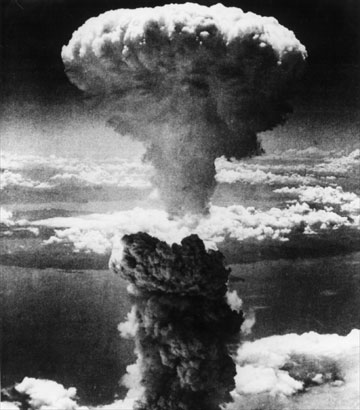 As the Taliban is slowly moving over the country, it is taking advantage of anti-American sentiment and, like it did in Afghanistan, is promising justice and order in the country. If the Taliban does take control of Pakistan, this will be a very serious issue. Quite simply, Pakistan has nukes. Not a lot, but one is enough. If an extreme group such as the Taliban has control over these weapons, all hell could break loose. Shipping a nuke overseas and striking another country would cause great destruction and fear and probably start a nuclear war. The potential targets are many, but the top three, in my best estimation, would be: 1. The United States, since it was the main aggressor in Afghanistan, forcing them out. 2. The United Kingdom, a major ally of the U.S. during the Afghanistan war. 3. India, Kashmir has been a source of tension ever since Great Britain split the countries up in the 40s.
While a nuclear attack on all three countries is devastating, the nuclear fallout will affect not only the human population of the affected region, but food production would be affected in India and maybe even China. A food shortage in the world's two most populous countries (both of which are nuclear capable and emerging economic giants) will cause chaos which could pull the entire world into conflict. The bottom line is, Pakistan cannot fail. The ramifications are too dire.
April 9, 2009
No Nukes is Good Nukes?

With the recent test launching of a Taepodong-2 intercontinental ballistic missile in North Korea and the recent statements by the Iranian president Mahmoud Ahmadinejad about welcoming talks with the United States, one begins to wonder why countries pursue nuclear weapons technology. Nuclear weapons have been around for over sixty years and there are only eight countries with confirmed nuclear weapons (nine when you include Israel which does not acknowledge its weapons). During their lifespan, the main uses of nuclear weapons have been as a deterrent or as a bargaining chip. Throughout the Cold War, both the United States and the Soviet Union had enough nuclear weapons to ensure that no matter what happened, each could destroy the other (See: Destruction, Mutually Assured).
Currently, Iran and North Korea are both pursuing nuclear technology (North Korea tested a bomb in 2006 and Iran maintains that its research is peaceful). North Korea has been funneling its very scarce resources toward advancing its nuclear program even though it is dependent on foreign aid. While it is such an economically poor country, why divert efforts toward a struggling nuclear program? One large reason is internal politics. In order to keep control, the regime is trying to maintain very high nationalist sentiments. If their country is internally perceived as among the world leaders in military power, North Koreans will think more highly of their government. While most consider the rocket test a failure (stages two and three failed and the missile did not reach orbit and subsequently fell into the ocean), the North Korean press was excitedly proclaiming that this was a great success. While failing to raise the living standards of its people, the government is creating positive spin in its own press.
Another reason for the test, as advocated by Victor Cha in his article "Pyongbang!", is that Kim Jong Il is in failing health and the the ruling class is stirring up trouble due to the "political fluidity within Pyongyang." Both of these factors are likely playing off of one another in a nasty feedback loop. Due to Kim's failing health, the ruling class is setting itself up for the eventual change in leadership as well as keeping internal pressures at bay.
North Korea is also setting itself up to reap rewards in the international arena by engaging in talks. In general, according to Henry Kissenger's book Diplomacy, talks are a favorite tool used by diplomats to buy time. While North Korea is engaged in talks, the longer it has to negotiate, the stronger its position will be as it will have advanced its nuclear project and it will be more difficult for other nations to take action against it which is why even though its test was a failure, it still was a success for North Korea.
Subscribe to:
Posts (Atom)