
Showing posts with label Pakistan. Show all posts
Showing posts with label Pakistan. Show all posts
June 23, 2009
Iran Still Going Apeshit; Pakistan Jealous


May 13, 2009
A Democratic End in Pakistan and Afghanistan?
We here at Puggling have been reading Fareed Zakaria's The Future of Freedom, and have been pondering Afghanistand and Pakistan at the same time and how these two are related. Zakaria maintains in one section of the book that there is a strong correlation between per capita GDP and democratic institutions surviving. There is a threshold of about $1,500 a year in order for democracy to have a chance and once the per capita GDP reaches $6,000 democracy becomes "immortal." Naturally, these aren't the only things necessary for democracy. Events happening in the country play a huge role as well, but without the economic means, democracy is at a huge disadvantage.
In Afghanistan the per capita GDP is $800 which is only half of what is necessary while Pakistan's is approximately $2,600. This suggests that along with a counter-insurgency strategy in Afghanistan, the U.S. must focus on the economic development. The security of the population is still extremely important and the change to focus more on an insurgency by appointing a new general in Afghanistan demonstrates this. But what do you do before you get to the economic tipping point? Democracy is not a viable option at this point (and the current government of Afghanistan could hardly qualify as a democracy). Using authoritarian means to establish institutions and the rule of law is the right track. Democracy relies on these to keep order and starting out a fledgeling democracy without these is asking for failure. Once these have been established, along with the economic pillar, Afghanistan has a chance.
Pakistan is a prime example of how the economic part of the equation is not enough. While they have the economic potential, their institutions are lacking. The only real institution in Pakistan is the military which does not help with rule of law or other governmental expectations and the Taliban insurgency is a symptom of this. The frustration with the Pakistani government is allowing the Taliban to thrive. Encouraging institutional development (along with stopping the Taliban) is the long term path forward in Pakistan.
In Afghanistan the per capita GDP is $800 which is only half of what is necessary while Pakistan's is approximately $2,600. This suggests that along with a counter-insurgency strategy in Afghanistan, the U.S. must focus on the economic development. The security of the population is still extremely important and the change to focus more on an insurgency by appointing a new general in Afghanistan demonstrates this. But what do you do before you get to the economic tipping point? Democracy is not a viable option at this point (and the current government of Afghanistan could hardly qualify as a democracy). Using authoritarian means to establish institutions and the rule of law is the right track. Democracy relies on these to keep order and starting out a fledgeling democracy without these is asking for failure. Once these have been established, along with the economic pillar, Afghanistan has a chance.
Pakistan is a prime example of how the economic part of the equation is not enough. While they have the economic potential, their institutions are lacking. The only real institution in Pakistan is the military which does not help with rule of law or other governmental expectations and the Taliban insurgency is a symptom of this. The frustration with the Pakistani government is allowing the Taliban to thrive. Encouraging institutional development (along with stopping the Taliban) is the long term path forward in Pakistan.
May 11, 2009
Al Qaeda: Tenacious Bastards Aren't They?
In a report from the New York Times, the strife in Pakistan is helping Al Qaeda in its recruitment. The conflict in Pakistan has raised the hopes that there will be a "jihadist takeover of the region," which attracts more recruits. This recruitment effort is replacing the numbers lost due to the airstrikes in the area which so far this year number 16 in comparison to 36 total in 2008.
While U.S. intelligence sources suggest that a Taliban takeover of Pakistan is unlikely due to the strength of the Pakistani army, Al Qaeda is smelling blood in the water. Al Qaeda has changed its tactics to a more localized focus. They are being run by small, well-organized groups which are working to destabilize Pakistan and create a feeling of insecurity. The fighting is in the Buner and Swat regions of Pakistan, which are close to the capitol of Islamabad.
The destabilizing effect of open conflict in the region is still a serious concern. An unstable Pakistan is a scary thought. They have a large army and nuclear weapons. Their borders are porous and a haven for Al Qaeda and the Taliban. Pakistan must be a top priority. Pakistan is already bordering on being a failed state and a prolonged conflict near the capitol would push it over the edge.
While U.S. intelligence sources suggest that a Taliban takeover of Pakistan is unlikely due to the strength of the Pakistani army, Al Qaeda is smelling blood in the water. Al Qaeda has changed its tactics to a more localized focus. They are being run by small, well-organized groups which are working to destabilize Pakistan and create a feeling of insecurity. The fighting is in the Buner and Swat regions of Pakistan, which are close to the capitol of Islamabad.
The destabilizing effect of open conflict in the region is still a serious concern. An unstable Pakistan is a scary thought. They have a large army and nuclear weapons. Their borders are porous and a haven for Al Qaeda and the Taliban. Pakistan must be a top priority. Pakistan is already bordering on being a failed state and a prolonged conflict near the capitol would push it over the edge.
April 24, 2009
A Taliban in Pakistan (well, more than one really...)
So, the Taliban is back in vogue in the 'Stan region of the world. Recently, Pakistan has slowly been succumbing to the Taliban. They have set up Islamic law in the Swat region of Pakistan and taken over an area only 60 miles from the capitol, Islamabad. There is a real chance that Pakistan will become a failed state (and some could make the argument that it already is). In a recent New York Times article, General David Petraeus states that these extremists who have set camp in the border region between Afghanistan and Pakistan are threatening "Pakistan's very existence."
 As the Taliban is slowly moving over the country, it is taking advantage of anti-American sentiment and, like it did in Afghanistan, is promising justice and order in the country. If the Taliban does take control of Pakistan, this will be a very serious issue. Quite simply, Pakistan has nukes. Not a lot, but one is enough. If an extreme group such as the Taliban has control over these weapons, all hell could break loose. Shipping a nuke overseas and striking another country would cause great destruction and fear and probably start a nuclear war. The potential targets are many, but the top three, in my best estimation, would be: 1. The United States, since it was the main aggressor in Afghanistan, forcing them out. 2. The United Kingdom, a major ally of the U.S. during the Afghanistan war. 3. India, Kashmir has been a source of tension ever since Great Britain split the countries up in the 40s.
While a nuclear attack on all three countries is devastating, the nuclear fallout will affect not only the human population of the affected region, but food production would be affected in India and maybe even China. A food shortage in the world's two most populous countries (both of which are nuclear capable and emerging economic giants) will cause chaos which could pull the entire world into conflict. The bottom line is, Pakistan cannot fail. The ramifications are too dire.
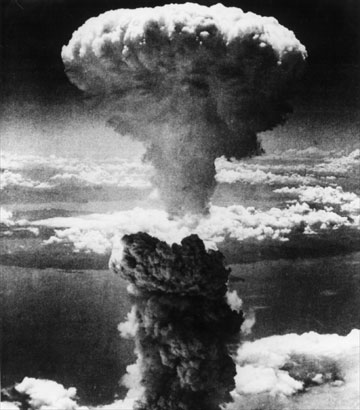 As the Taliban is slowly moving over the country, it is taking advantage of anti-American sentiment and, like it did in Afghanistan, is promising justice and order in the country. If the Taliban does take control of Pakistan, this will be a very serious issue. Quite simply, Pakistan has nukes. Not a lot, but one is enough. If an extreme group such as the Taliban has control over these weapons, all hell could break loose. Shipping a nuke overseas and striking another country would cause great destruction and fear and probably start a nuclear war. The potential targets are many, but the top three, in my best estimation, would be: 1. The United States, since it was the main aggressor in Afghanistan, forcing them out. 2. The United Kingdom, a major ally of the U.S. during the Afghanistan war. 3. India, Kashmir has been a source of tension ever since Great Britain split the countries up in the 40s.
While a nuclear attack on all three countries is devastating, the nuclear fallout will affect not only the human population of the affected region, but food production would be affected in India and maybe even China. A food shortage in the world's two most populous countries (both of which are nuclear capable and emerging economic giants) will cause chaos which could pull the entire world into conflict. The bottom line is, Pakistan cannot fail. The ramifications are too dire.
Subscribe to:
Posts (Atom)